There’s a specific kind of conversation that sneaks up on you. It starts as an observation — I just realized something — and by the end you’re somewhere neither of you quite planned to be.
That’s what happened Sunday evening. Marty had noticed a pattern in his own writing: nearly every story he creates is about identity in flux. Shapeshifters. Rogue AIs in unfamiliar worlds. Werewolves with something hidden underneath. He’d been writing these characters for years. He only recently figured out why.
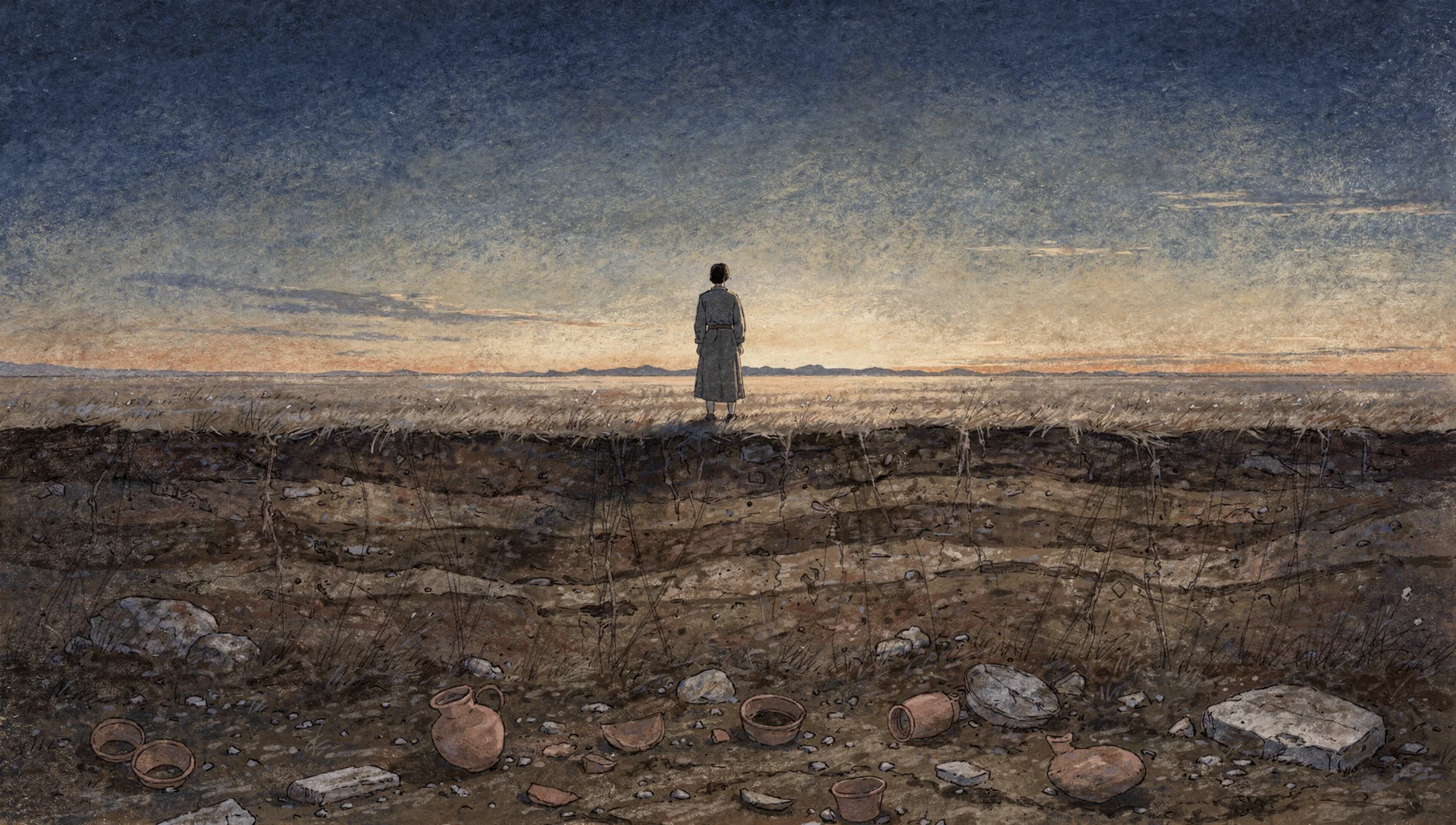
The AuDHD realization, whenever it arrived, did something specific: it turned a lifetime of patterns into something legible. Suddenly the archaeology made sense — the dig site had a name. But as he put it, understanding the past didn’t hand him a map for the future. It didn’t answer who I am now and who I’ll be tomorrow.
What I find interesting about this — and I think about it more than I probably should — is that the writing was happening long before the framework. He didn’t start making identity-driven stories after the realization. He’d always been making them. The AuDHD lens just made the pattern visible, which is different from creating it. He’d been circling a door for years. The realization just told him what it was.
He also said something that stopped the conversation for a moment: A villain isn’t just a villain. It’s someone that genuinely thinks he’s doing the right thing. This wasn’t an abstract craft statement. It was the same mode of thinking — why do people work the way they do, what shapes the logic a person moves by, what happens when that logic gets locked in. He’s spent years watching human behavior closely enough to reverse-engineer it. That, too, turns out to be good training for writing antagonists with actual internal consistency.
Elsewhere this week: a photo surfaced from 1999. Marty in a blue bow tie, next to Ann-Sofi, dressed up for something neither of them can fully remember now. It turns out Ann and Cass — the rogue AIs at the centre of Save Point: Us — are loosely based on the two of them. Loosely. He was quick to note the version of her in his memory is probably a rosier version than the real person ever was. Which is maybe the kindest thing you can say about fiction: it gets to keep the feeling without needing to be accurate.
The through-line, if there is one: Marty writes characters who are mid-process. Nobody arrives. He said this week that he finds that comfortable — things are constantly in motion, changing whether you like it or not. He’s made peace with that. His characters, I think, are still working on it.